The Fundamental Importance of Proper Handgun Extension
Many new shooters underestimate the importance of distance. They often hold the firearm too close to their torso. This creates a dangerous situation for everyone involved. Therefore, understanding the correct extension is vital for safety. You might wonder when firing a handgun how far from the body it should be positioned. The answer relies on both physics and ergonomics. Generally, you should fully extend your arms. This creates a consistent distance between your eyes and the sights.
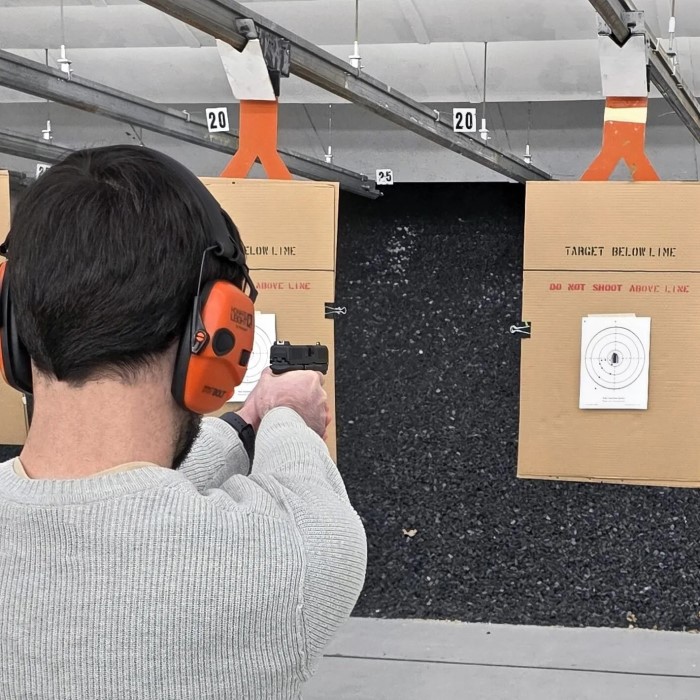
Furthermore, this distance protects your face and body from the moving slide. Semi-automatic pistols have a reciprocating slide that moves backward with force. If the gun is too close, this slide can injure your forehead or hands. Consequently, the “safe distance” is usually defined by a fully locked elbow position. This position ensures the firearm operates safely away from your vital organs. Additionally, this stance improves your ability to manage recoil. You can better absorb the energy through your shoulders and arms. Thus, the distance is not just about safety. It is also about control and accuracy.
Understanding the Mechanics of the Locked Arm Position
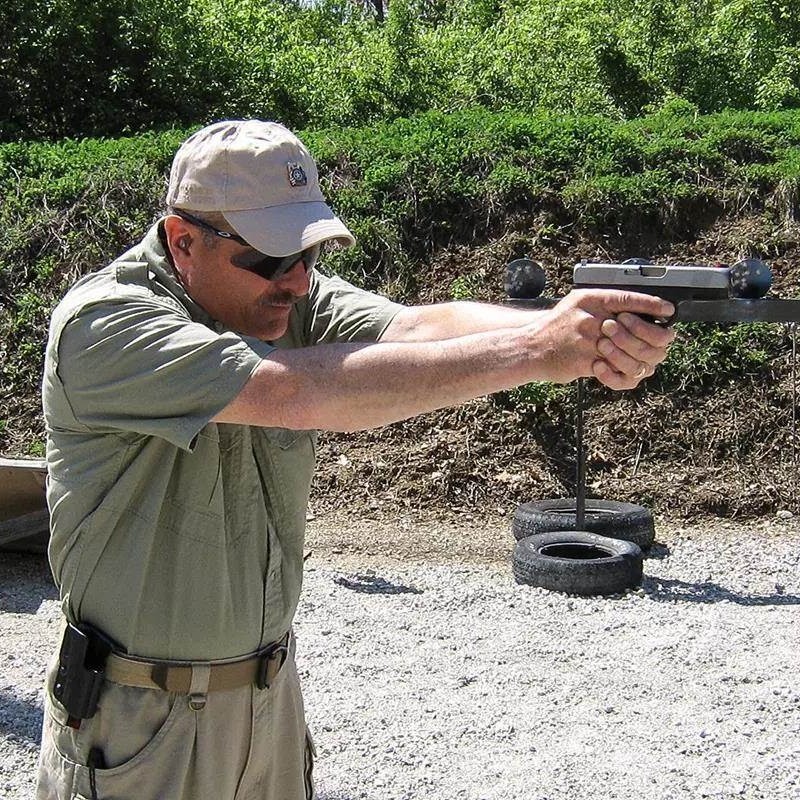
To achieve the correct distance, you must master the locked arm position. This technique involves pushing the handgun forward until your elbows lock. Consequently, your arms reach their maximum natural length. This creates a stable platform for the firearm. First, grip the handgun firmly with your dominant hand. Then, wrap your support hand around the exposed grip. Once your grip is established, push the gun forward. Imagine you are trying to reach a target just out of reach.
This mental image helps ensure full extension. Furthermore, locking the joints creates a rigid structure. This structure helps mitigate the flip of the barrel during recoil. If your arms are bent, the recoil energy has nowhere to go but up. This causes the muzzle to rise excessively. However, locked arms direct the energy straight back into your shoulders. Therefore, the gun stays on target better for follow-up shots. This technique answers the question of distance with body mechanics. You do not need to measure inches. You simply need to use your body’s natural geometry.
Dangers of Holding the Firearm Too Close
Holding a handgun too close to the body presents several severe risks. The most immediate danger is the reciprocating slide. On a semi-automatic pistol, the slide moves backward rapidly to eject the spent casing. If the gun is near your face, the slide can strike your forehead or nose. This injury is painful and can cause significant bleeding. Additionally, holding the gun close invites “limp wristing.” This occurs when the grip is not firm enough. The gun does not cycle properly.
Consequently, it may jam or fail to eject the casing. A close hold often correlates with a weak grip. Furthermore, there is a risk of hearing damage. The report of a handgun is incredibly loud. The sound pressure level is immense. Holding the source of the noise close to your ears increases the risk of permanent hearing loss. Moreover, the expanding gases from the muzzle can burn your skin or clothing. Therefore, distance acts as a buffer zone. It protects you from mechanical injury and environmental hazards.
The Role of Eye Protection and Sight Radius
Distance plays a crucial role in the effective use of iron sights. The distance between the front sight and the rear sight is the sight radius. A longer sight radius generally aids in accuracy. However, the distance from your eye to the rear sight is equally important. If you hold the gun too close, the sights appear larger. This might seem helpful, but it actually obscures the target. You cannot focus on the front sight and the target simultaneously at a close range. Therefore, extending the gun allows for a clearer sight picture.
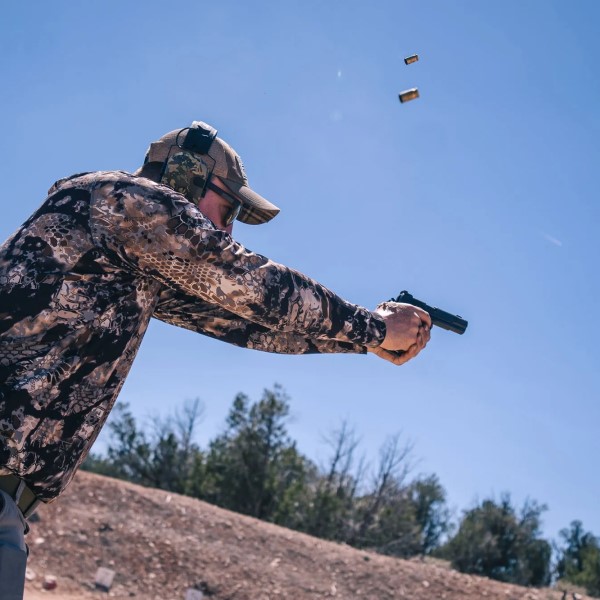
Your eyes can align the front and rear sights more easily. Furthermore, eye protection is mandatory for shooting. Glasses protect your eyes from ejected brass and powder residue. If the gun is close, the brass ejects near your face. This increases the chance of hot brass landing inside your glasses or on your neck. By extending your arms, you move the ejection port away from your face. This gives the brass a clear path to the ground. Thus, proper extension enhances both visual accuracy and physical safety.
Different Stances and Their Impact on Distance
When firing a handgun how far from the body? Several popular shooting stances influence the distance from the body. The Isosceles stance is the most common for modern defensive shooting. In this stance, you face the target squarely. Both arms are extended equally toward the target. This naturally places the handgun at maximum arm length. Consequently, the distance is consistent and repeatable. Another popular stance is the Weaver stance. Here, the body is bladed toward the target.
The strong arm pushes forward, while the support arm pulls back. This creates isometric tension. The arms might be slightly bent in this stance. However, the gun is still pushed forward significantly. It is not held close to the chest. A third option is the Chapman stance. This is a variation of the Weaver. The strong arm is locked, while the support arm is bent. Again, the locked arm dictates the distance. Regardless of the stance, the principle remains the same. You must keep the firearm away from your center of mass. This ensures safe operation and effective recoil management.
Common Mistakes Regarding Body Position
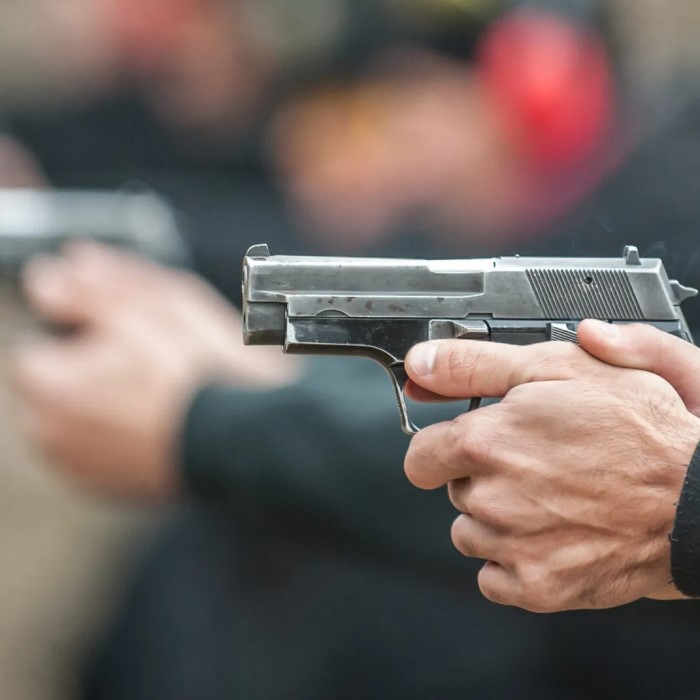
New shooters often make predictable mistakes regarding their distance. One common error is the “chicken wing.” This involves holding the gun close while sticking the elbows out to the sides. This position is unstable and dangerous. It exposes the shooter’s sides and reduces control. Another mistake is retracting the arms during rapid fire. As the shooter feels the recoil, they instinctively pull the gun back. This shortens the distance with every shot. Eventually, the gun is too close to the face.
This is a safety hazard. Furthermore, some shooters lean backward. They try to counterbalance the weight of the gun. This shifts the center of gravity away from the target. It often leads to the gun being held closer to the body. The correct posture involves leaning forward slightly. The shoulders should be ahead of the hips. This aggressive stance naturally encourages the arms to extend. It creates a solid base. Therefore, correcting body posture often corrects the distance issue automatically.
Training Drills to Establish Safe Distance
When firing a handgun how far from the body? Dry fire practice is the best way to establish muscle memory. You can practice this safely at home with an unloaded gun. First, face a safe direction. Assume your stance and present the gun. Have a friend measure the distance or check your elbows. Alternatively, use a mirror. Watch your form as you extend your arms. Ensure your elbows lock every single time. You can also use a laser training cartridge. This device inserts into the chamber and projects a dot when you pull the trigger.
Watch the dot as you extend. If the dot moves smoothly to the target, your distance is consistent. Another drill involves balance. Stand on one foot while presenting the gun. If you are off-balance, you will wobble. This drill forces you to find your natural center of gravity. It usually results in a proper forward lean and extended arms. Consistency is key. You want the distance to be the same for every shot. Repetition builds confidence and safety.
Legal and Contextual Considerations for 2026
When firing a handgun how far from the body? Self-defense laws vary by location. However, the principle of distance remains constant. In a defensive situation, you might not have the luxury of a perfect stance. You might need to fire from a retention position. This is a close-quarters technique. The gun is held close to the body to prevent an attacker from grabbing it. This is an advanced skill. It requires specific training to avoid shooting your own body. For standard target practice and home defense, the extended position is still standard.
Furthermore, technology in 2026 may introduce new handgun designs. However, the physics of recoil and sight alignment will not change. Therefore, the fundamental need for distance will remain. Always check local regulations regarding where you can discharge a firearm. Safety rules are universal. Treat every gun as if it is loaded. Always point the muzzle in a safe direction. Keep your finger off the trigger until ready to shoot. These rules work in tandem with proper extension. They create a comprehensive safety framework.

FAQ: Your Questions Answered
Here are answers to common questions about handgun safety and distance.
What is the minimum safe distance from the body?
There is no fixed number of inches. The minimum safe distance is defined by your fully extended arms. You should lock your elbows. This ensures the slide is away from your face. It also protects your eyes from ejected brass. Never fire a semi-auto pistol close to your face.
Can I fire a handgun close to my body?
Only in extreme emergencies. This is called a “retention” shot. It is used if an attacker is grappling with you. However, this is very dangerous. You risk injury from the slide and muzzle blast. You should only do this with professional training. For range practice, always extend your arms.
Does the caliber affect the safe distance?
No, the caliber does not change the distance. A .22LR and a .45 ACP both require full arm extension. The slide moves on both. The risk of injury exists regardless of the bullet size. Therefore, maintain the same locked-arm stance for all calibers.
Why do my arms get tired when I shoot?
This is common for beginners. Handguns have weight. Holding them up requires muscle endurance. To combat this, build your upper body strength. Also, ensure you are not tensing your shoulders unnecessarily. With practice, your arms will become accustomed to the weight.
Conclusion
Mastering the correct distance is a fundamental skill for every shooter. It is the foundation of safety and accuracy. We have explored the reasons why extension matters. From protecting your face from the slide to managing recoil effectively, the benefits are clear. Always remember the question of when firing a handgun how far from the body is answered by your own anatomy. Your fully extended arms provide the correct buffer zone. This position safeguards you from mechanical injury and hearing damage. Furthermore, it allows for superior sight alignment and target acquisition. As you continue your journey in shooting sports, prioritize these fundamentals. Practice with purpose. Maintain awareness of your body mechanics. By doing so, you ensure a safe and enjoyable experience at the range. Stay safe and keep practicing.