Introduction
Outdoor climbing offers a thrilling sense of freedom and connection with nature. However, this exhilarating activity comes with inherent risks that every climber must manage carefully. One of the most critical pieces of safety equipment for any bouldering enthusiast is a high-quality crash pads. These portable cushions serve as the primary barrier between a climber and the hard ground below. Consequently, they significantly reduce the impact force during a fall. Unlike top-rope climbing, bouldering involves climbing relatively short heights without ropes or harnesses. Therefore, the potential for ground falls is much higher. A good pad acts as a portable safety net. It allows climbers to push their limits with greater confidence.
Whether you are a beginner tackling your first V0 or a seasoned pro working on a V10 project, the right equipment matters. Understanding the construction, types, and proper usage of these pads is essential for safety. This article will guide you through everything you need to know. We will explore foam types, design features, and usage techniques. By the end, you will understand why investing in the right pad is non-negotiable for a safe and enjoyable climbing experience.
The Anatomy of High-Quality Crash Pads
To the untrained eye, a crash pad might look like a simple oversized cushion. However, modern crash pads are marvels of engineering designed for specific impact absorption. The core component is the foam, usually consisting of multiple layers of different densities. Typically, manufacturers use a combination of open-cell and closed-cell foam. The top layer is usually firmer, closed-cell foam. This layer prevents the climber from “bottoming out” or hitting the ground through the pad. It spreads the impact force over a larger surface area. Conversely, the bottom layer is often softer, open-cell foam. This layer absorbs the energy of the fall and provides a comfortable landing. Some premium pads even feature a third layer or “hinge” technology. This design ensures that the pad folds effectively without compromising protection at the center crease.
Furthermore, the outer shell is just as important as the foam inside. Most high-quality pads use durable, water-resistant materials like ballistic nylon or PVC-coated tarpaulin. These materials must withstand abrasive rock surfaces, dirt, and moisture. The seams are often reinforced to prevent tearing during rough landings or transportation. Additionally, the shell usually includes metal buckles or heavy-duty hook-and-loop closures. These keep the pad securely closed when being carried. Another critical anatomical feature is the suspension system. Since climbers often hike long distances to reach boulders, the pad doubles as a backpack. Quality pads feature comfortable shoulder straps, waist belts, and chest straps. These help distribute the weight evenly across the climber’s back. Some designs even include extra pockets for shoes, chalk bags, and water bottles. This integrated storage solution minimizes the need for additional bags. Therefore, a well-designed pad combines physics, material science, and ergonomic design to protect the climber.
Different Types of Crash Pads for Every Climber
Not all pads are created equal, and understanding the variations is key to choosing the right one. The market offers several distinct types, each with its own advantages and disadvantages. First, there are “baffled” pads. These contain internal chambers that hold the foam in place. This design ensures even protection across the entire surface, even when the pad is dragged over uneven terrain. The foam does not shift or bunch up inside the shell.
Consequently, baffled pads are often considered superior for rugged outdoor environments. They provide consistent safety regardless of how the pad lands. Second, there are “taco” style pads. These fold in half but do not have a crease in the middle. They create a U-shape when open. The main benefit of a taco pad is that there is no weak spot in the center where the two halves meet. This makes them incredibly durable and excellent for covering large, flat areas. However, they can be bulky to carry.
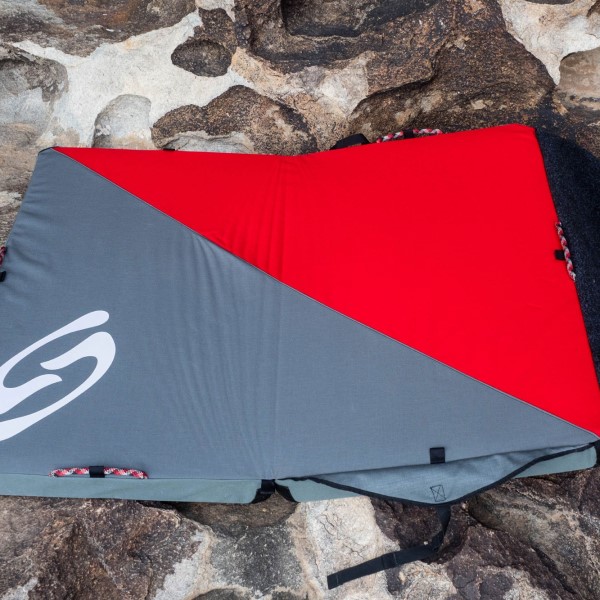
Third, we have the standard “hinged” pads. These fold like a book. They are usually lighter and easier to carry than baffled pads. The hinge design allows them to lie completely flat with minimal effort. However, a potential downside is the “gaper” hazard. This is a small gap that can form at the hinge when the pad is placed on an uneven rock. If a climber lands directly on the hinge while it is bridging a rock, the protection is compromised.
Strategic Placement and Spotting Techniques
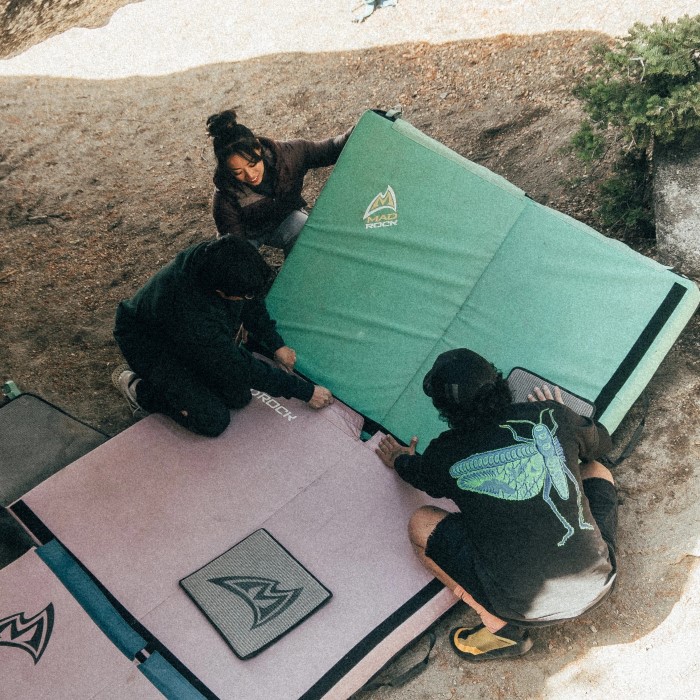
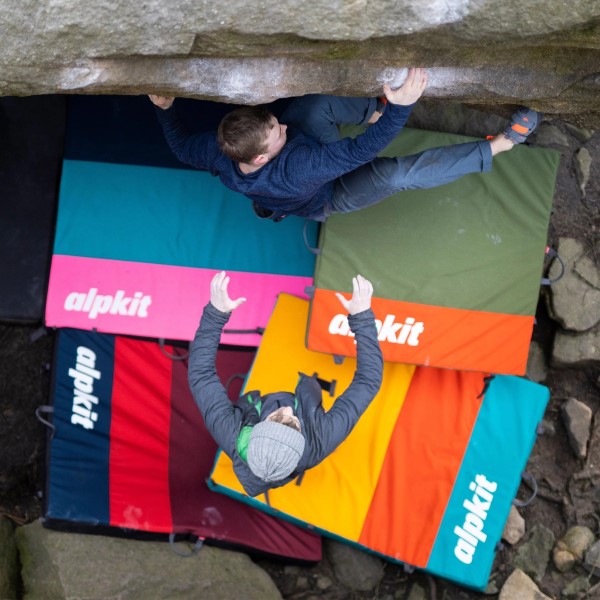
Owning the best pad on the market is useless if you do not know how to use it correctly. Proper placement is an art form that every boulderer must master. The primary goal is to cover the most likely landing zones. You must analyze the climb and predict where a fall might occur. Start by clearing the landing area of loose rocks, sticks, and debris. These objects can cause injury even with a pad underneath. Once the ground is clear, position the pad directly below the climber. If you have multiple pads, use them to create a continuous landing surface. You should aim to eliminate any gaps between the pads. Gaps between mats can twist ankles or break legs. Therefore, overlapping the edges of the pads is a crucial technique. This ensures a smooth transition if a climber rolls during a fall.
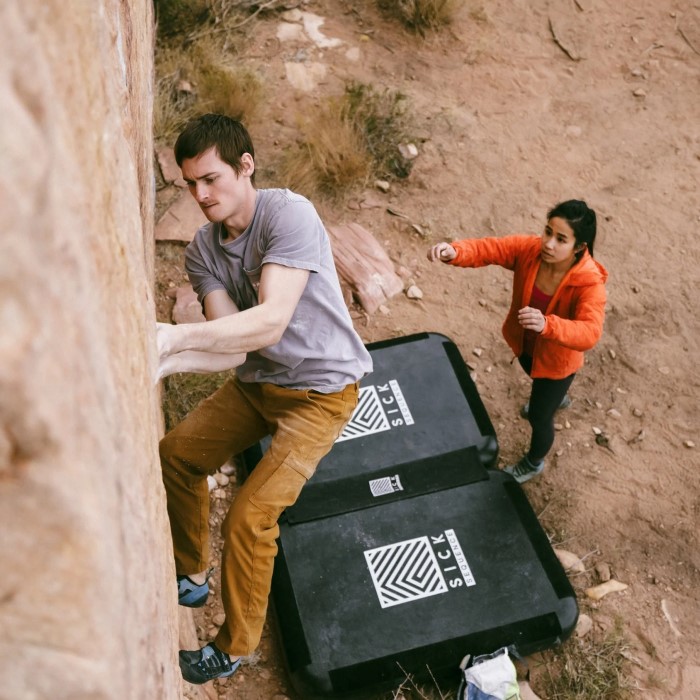
However, a pad alone is not always enough. This is where the role of a “spotter” becomes vital. A spotter is a person who stands near the climber to guide them during a fall. The spotter does not catch the climber. Instead, they steer the falling climber onto the center of the pad. They protect the climber’s head and neck from hitting the ground or surrounding rocks. Effective spotting involves keeping your arms raised and thumbs tucked in to prevent injury.
Choosing the Right Size and Thickness
Selecting the appropriate dimensions for your crash pads involves balancing safety with portability. Pads generally range in size from small “sit start” mats to massive “mattress” sized pads. The thickness typically varies between 3 inches and 5 inches. For high-ball bouldering, where the climbs are significantly taller, a thicker pad is mandatory. A 4-inch or 5-inch pad provides the necessary depth to absorb a fall from greater heights. If you use a thin pad for a high fall, you risk bottoming out. This means your body compresses the foam entirely and hits the ground underneath. This can result in serious injury. Therefore, for high-altitude problems, prioritize thickness over width. On the other hand, standard bouldering usually involves shorter climbs. Here, a standard 3-inch or 4-inch pad is often sufficient.
Moreover, the size of the pad dictates its portability. Large pads offer excellent coverage but can be heavy and cumbersome to haul up a steep trail. If you are a solo climber who hikes long distances, a massive pad might be discouraging to carry. Conversely, small pads are lightweight and easy to transport. However, they offer limited coverage. You might need to stack multiple small pads to achieve the same protection as one large pad. Many climbers opt for a “main pad” and a smaller “supplemental pad.”
The main pad serves as the primary landing zone. The smaller pad is used to cover specific rocks or gaps. When shopping, consider the volume of your vehicle as well. A massive pad might not fit easily into a small compact car. Some pads feature a “triple fold” design which makes them more compact when closed. This is an excellent feature for climbers with limited storage space. Ultimately, the choice depends on the specific climbing environment and the physical capabilities of the climber.
Essential Maintenance and Care Tips
A crash pad is a significant investment, and proper maintenance can extend its lifespan for many years. The foam and fabric are durable, but they degrade over time if neglected. One of the most common enemies of foam is moisture. If your pad gets wet during a rainy session, you must dry it out thoroughly before storing it. Storing a wet pad leads to mold and mildew growth. This can rot the fabric and create unpleasant odors. Furthermore, wet foam loses its shock-absorbing properties. It becomes heavier and less effective. Therefore, always open your pad and air it out as soon as you get home. Do not leave it stuffed in your car trunk for weeks. The heat and confined space can also damage the foam structure.
In addition to moisture, dirt and sand are major concerns. Sand acts like sandpaper on the fabric. When you drag your pad over the ground, the friction wears down the fibers. Eventually, this leads to holes and tears. To prevent this, try to carry your pad rather than drag it whenever possible. If you do need to drag it, be mindful of the terrain. If the shell gets dirty, clean it with a mild soap and water solution. Use a soft brush to scrub away caked mud.
The Psychology of Safety in Climbing
While the physical attributes of crash pads are crucial, the psychological aspect of safety is equally important. Climbing is a mental game as much as a physical one. Fear of falling can paralyze a climber. It prevents them from committing to difficult moves. This hesitation often leads to poor technique and increased risk of injury. Having a high-quality, well-placed pad provides a mental safety net. It allows the climber to focus entirely on the movement and the problem at hand. When you trust your landing zone, you can push your physical limits without reservation. You are more willing to attempt dynamic moves or high-risk maneuvers. This confidence is essential for progression in the sport. Conversely, an inadequate setup creates doubt. The climber worries about the landing instead of the climb. This negative mindset increases the likelihood of a fall.
Furthermore, the presence of a good pad encourages a safer falling technique. Experienced climbers know how to fall. They relax their bodies, keep their limbs loose, and roll with the impact. A soft landing surface makes this technique easier to execute. You are less likely to tense up and stiff-arm the ground if you trust the pad. Therefore, investing in good gear is an investment in your mental training. It builds the confidence required to send hard projects. It transforms a terrifying prospect into a manageable risk.
This psychological safety net extends to the spotter as well. A spotter feels more confident in their ability to help when they have a solid foundation to stand on. They can move quickly and effectively without worrying about tripping over a flimsy mat. Safety creates a positive feedback loop. Good gear leads to confidence, which leads to better climbing, which ultimately leads to more success and enjoyment.
Frequently Asked Questions
Are crashpads illegal?
The legality of using crash pads is a nuanced topic. Generally, possessing and using a crash pad for climbing is perfectly legal. However, the location where you use it might have specific regulations. Many land managers, such as state parks or national forests, have strict rules about fixed anchors and bolts. While crash pads are mobile and do not damage the rock, some areas limit bouldering to protect the environment. For instance, soil erosion at the base of climbs is a concern. Therefore, some jurisdictions might restrict the use of large pads to prevent vegetation damage. You should always check the local rules and regulations before heading out. Contact the park service or check their website. Responsible climbing involves respecting land closures and access issues. As long as you are climbing in a permitted area and following Leave No Trace principles, your crash pad is legal.
What is a crash pad slang?
The term “crash pad” has two distinct meanings depending on the context. In the climbing world, it refers to the foam mattress used for safety. However, outside of climbing, the term is often used as slang in the airline industry. Flight attendants and pilots often use the term “crash pad” to describe temporary housing. Since airline crews often work in different cities than where they live, they need a place to sleep between shifts.
A “crash pad” is essentially a shared apartment or house where crew members rent a bed or a room for short periods. It is a place to rest or “crash” before the next flight. These locations are often crowded and utilitarian. The term is slightly humorous because it implies a rough or temporary setup. So, if you hear someone talking about finding a crash pad, make sure you know if they are a climber or a pilot. The equipment and the accommodation are vastly different things.
Why do autistic kids like crash pads?
Outside of the climbing world, “crash pads” are also a popular therapeutic tool for children with autism. In this context, a crash pad is a large, soft foam cushion used in sensory integration therapy. Many children with autism spectrum disorder (ASD) have sensory processing differences. They may seek deep pressure input, known as proprioception. Jumping or falling into a soft foam pad provides this heavy pressure. It helps calm their nervous system.
The sensation of landing in the foam is organizing for the body. It provides feedback to the joints and muscles. This can help reduce anxiety, improve focus, and regulate emotions. Furthermore, crash pads are simply fun. They provide a safe environment for active play. Children can jump, roll, and play rough without the risk of injury. This therapeutic use highlights the versatility of the concept. While the design differs slightly from climbing pads, the fundamental principle of safety and impact absorption remains the same. It serves as a safe harbor for both physical and emotional regulation.
Conclusion
In summary, crash pads are the unsung heroes of the bouldering world. They provide the physical protection necessary to prevent injuries and the psychological confidence needed to climb hard. From the multi-layered foam construction to the rugged outer shell, every aspect of their design serves a specific safety purpose. Whether you choose a baffled, taco, or hinged model, understanding your equipment is the first step toward safe climbing. Moreover, proper placement and maintenance extend the life of your pad and ensure its reliability. As you venture out on your next outdoor trip, remember that safety is a holistic practice. It combines the right gear, proper spotting techniques, and a respect for the environment. Investing in a high-quality pad is an investment in your climbing future. So, pack your bag, check your pads, and climb with confidence.